
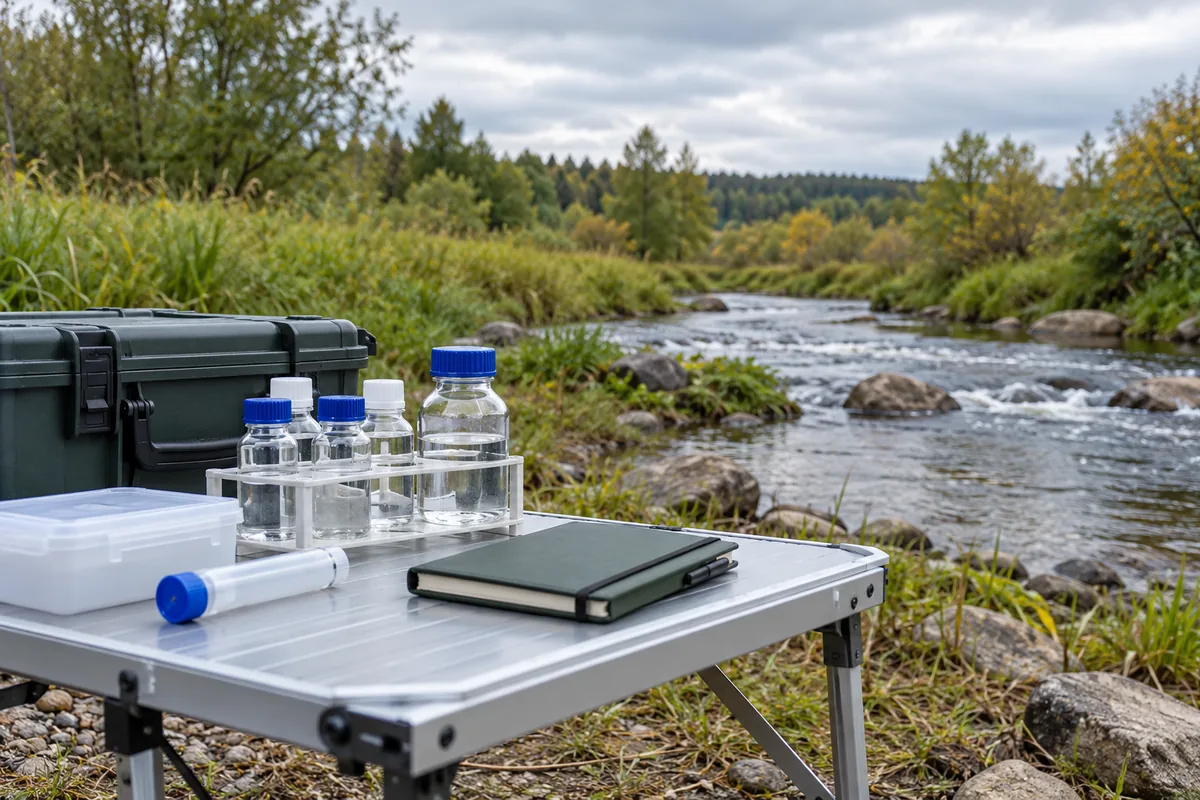
A sample test result describes the material examined under particular conditions. To use it in an environmental dispute, it is necessary to show where the sample was taken, why that particular location was chosen and how the sampling location, sample and laboratory test report are linked.
Define the task before the sampling plan
Locating a source of contamination, examining a particular area and assessing a change in environmental conditions require different examination plans. The result from a single randomly collected sample cannot automatically be extended to the entire land parcel, water body or a long period. The sampling plan is discussed with a specialist before the site visit.
What must be linked together
- A description of the object and the purpose of the examination.
- A plan of sampling locations with coordinates or other reproducible reference points.
- The date, time and relevant conditions at the site.
- The sampling method, depth or another parameter required for the particular environmental medium.
- The container identifier, sampling record and entry in the accompanying documents.
- Conditions of storage, transport and acceptance by the laboratory.
Why background conditions and heterogeneity matter
Different parts of an area may differ in their history of use, terrain and the composition of the environmental medium. The choice of background or comparison locations requires justification: the nearest visibly clean area is not necessarily a suitable background location. Conditions must allow meaningful comparison of the results.
The effects of weather, recent work and changes over time are assessed in the same way. For example, a water sample taken after rain and one taken during a dry period may reflect different conditions. This does not automatically make either test report incorrect, but it changes the limits of comparison.
Laboratory testing and expert interpretation
The required parameters, methods, suitability of containers and laboratory requirements are clarified before sampling. Where accreditation is required for the chosen task, its current status and scope are checked for the particular test, rather than relying solely on a logo on the website.
Detecting a substance, exceeding the value established for the applicable conditions and proving a particular source are separate questions. Establishing a causal link may require information on production processes, water movement, emissions, other potential sources and the sequence of events.
What to do with a test report already received
Keep the complete test report, sampling record, location plan, photographs and information on sample transfer. If any documents are missing, note this before discussing conclusions. Retesting a sample does not always remedy deficiencies in the original recording of its provenance.
The rationale for the examination must distinguish the measured result from the conclusion about the condition of the object. A single number without information about the sample cannot reliably describe the extent of contamination, how long it has been present or the person responsible for causing it.